.svg)
In The News
If you believe AI should be built responsibly, share this. The decisions being made in the next eighteen months will outlive every model we’re excited about today, and the communities carrying their cost deserve proof that the capacity was necessary.
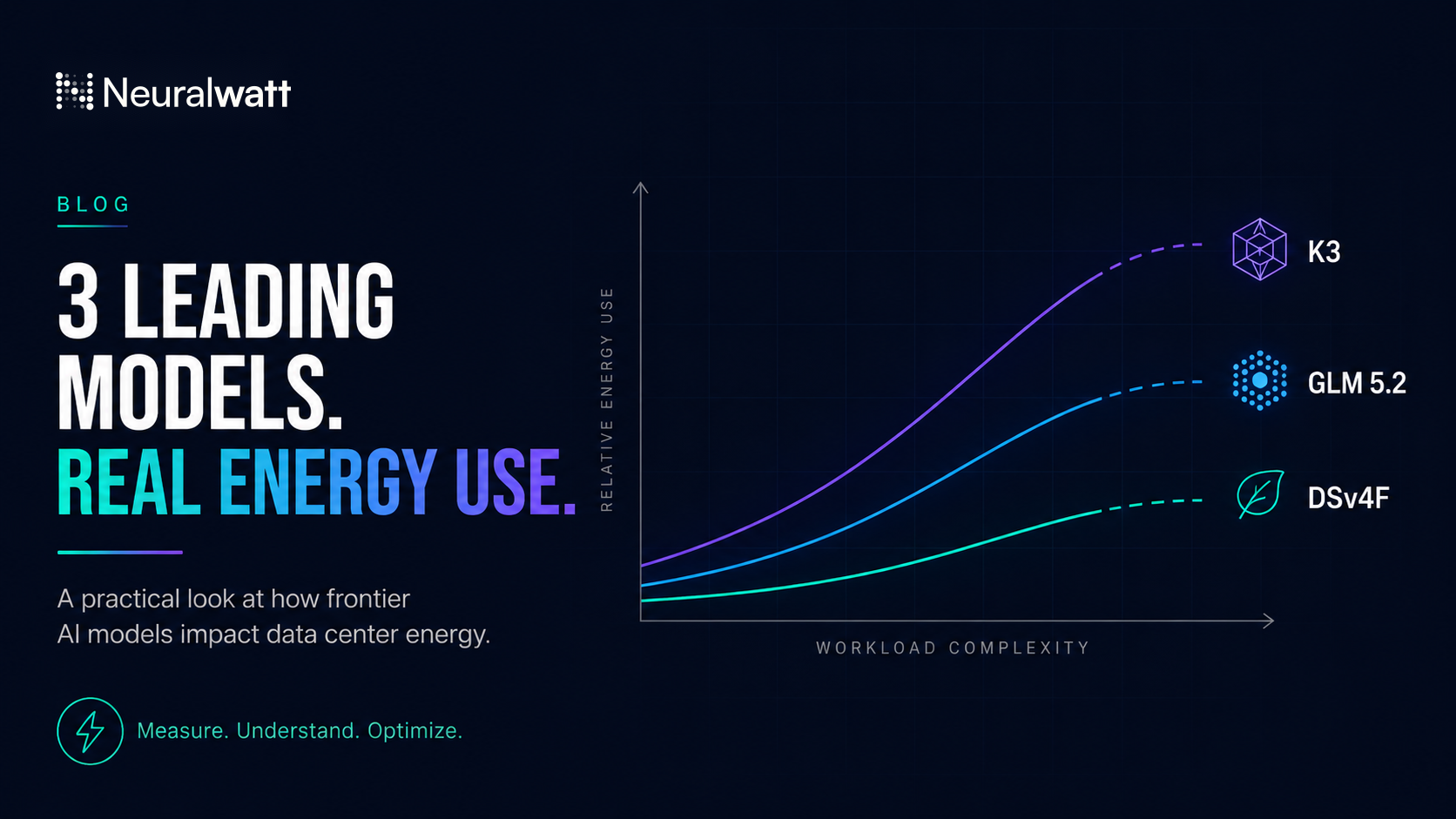
We review real world energy insights from the latest open weight models on Neuralwatt Cloud.
For the most part, the industry's answer to AI's growth has been more. More data centers, more power, more scale. Gigawatts of new demand, billions in new construction, and a race to secure capacity that treats energy as an asset to acquire rather than an asset to manage.
But scale that only the biggest players can afford isn't the future of AI, it's the bottleneck. When we launched Neuralwatt, we started from a different conviction — AI grows farther, faster, and more responsibly when the power we already have works harder, and when the economics work for everyone building with it. When you measure energy and optimize it, cost, performance, and sustainability stop pulling against each other. Six months into 2026, and our thesis is holding.
Developers proved the demand.
In March, we launched Neuralwatt Cloud featuring energy-based pricing, one of the only platforms in the industry to price AI this way. Instead of paying for an arbitrary token count, you pay for the actual compute your request uses. Leaner models and smarter prompts cost less, and efficiency benefits those building with AI. Since launching Neuralwatt Cloud, inference volume has doubled month over month, evidence of a market that has been waiting for AI to be priced honestly.
Energy-based pricing also means every team pays for what their requests actually consume, and our new Allowance feature keeps that spend exactly where you set it, with built-in limits by key, session, or agent. For enterprises, that means precision and predictability at scale. And for the developers and startups building on open-weight models, AI becomes affordable at any size.
Responsibility at scale.
Pricing AI honestly solves one problem. Making sure the infrastructure can sustain it solves the next one. This year, we tested that at the hardware level. In partnership with ZutaCore, we ran nearly 500 paired experiments on NVIDIA's latest B200 hardware, one of the industry's first studies to optimize compute and cooling together. The results yielded:
- 18 - 19% lower server power at every temperature tested
- Zero thermal throttling across the full 28 to 46°C range
- 3x better power stability
- Proof that the 45°C warm-water cooling approach NVIDIA is designing its next-generation Vera Rubin platform around works on current hardware today
The results proved that the efficiency assumptions underpinning the industry's next generation of data centers aren't speculative --- they're achievable now, with Neuralwatt software, on hardware that's already deployed.
In June, we also extended our visibility from energy to emissions, launching real-time carbon reporting built on live grid data from our partners at Electricity Maps. Every request on Neuralwatt now returns its energy, carbon, and cost as it runs, turning what has always been an annual estimate into a live number teams can use to report credibly and reduce emissions in real time.
The industry took notice.
One of the strongest signals of the past six months isn't just what we shipped, but who we worked with.
Hugging Face engaged us on their AI Energy Score, expanding energy benchmarking to cover reasoning models. The collaboration proved that energy is becoming a standard dimension of how AI models get evaluated, and we're helping write the standard.
GreenPT integrated our measurement to make AI's hidden energy costs visible to their users, Parasail incorporated our energy intelligence to work across their inference fleet, and the Sijbrandij Foundation named Neuralwatt a launch partner of the Data Center Power Coalition — twelve energy companies working to streamline how AI gets powered.
The Green Web Foundation also celebrated Neuralwatt as a model of a transparent, sustainable cloud service, one of the only AI platforms that prices by energy rather than tokens. And in April, we took the conversation directly to the builders, joining the OpenClaw community at ClawShop, their largest virtual event to date, to talk about what AI agents actually cost to run.
The way AI scales is being decided now.
The first half of 2026 confirmed that energy is becoming the defining constraint of the AI era. The grid can't grow as fast as demand, communities are pushing back on new construction, and regulators are demanding emissions data most of the industry can't produce. To boot, the pressure lands hardest on those with the least room to absorb it — small teams priced out of compute, neighborhoods carrying grid strain, and organizations that can't produce the numbers being asked of them.
In the second half of the year, we'll add more models to the platform, give users more ways to optimize cost and performance through Flex, and push optimization deeper into every request. Open-weight models have democratized access to AI; our work is making sure the energy and the economics let it grow responsibly.
.png)
Not every watt of compute needs to be spent the same way. Some AI work is urgent, but a lot of it isn't. And when a workload can wait, there's an opportunity to run it more efficiently, for a lower price, and with a lighter footprint on the grid. It’s precisely why we built Neuralwatt Flex.
.png)
In production environments, customers are already getting 33 percent more compute from the same power envelope. Now they can see the carbon behind every watt.
SEATTLE, Wash. — June 16, 2026 — Neuralwatt, the software company helping the AI industry get more compute from the power it already has, today launched real-time carbon reporting across its platform, building on the energy reporting and management it has offered since day one. Every AI request now returns per-request carbon and energy data alongside every response, turning what has historically been an annual estimate into a live, actionable metric.
At the current pace of AI growth, and if built and operated with today’s practices, data centers supporting AI could emit 24 - 44 million metric tons of carbon per year by 2030, equivalent to putting millions of additional cars on the road. And while most AI platforms measure usage in tokens, the metric offers zero visibility into energy consumption, grid impact, or emissions. Unlike tools that simply report energy and carbon usage, Neuralwatt measures in order to optimize, cutting energy and now carbon at the workload level, and providing a solution for both sustainability and operational efficiencies.
"Neuralwatt has always measured the energy behind every AI request. But energy only tells half the story," said Scott Chamberlin, co-founder and CTO of Neuralwatt. "Carbon connects that measurement to the grid, the region, and the environmental cost of every workload. That data unlocks an entirely new set of decisions for teams running inference at scale."
Why It Matters
AI's energy footprint and datacenters continue to impact surrounding communities through increased energy costs and infrastructure strain. In several U.S. states and European regions, planned data centers are expected to add gigawatts of new electricity demand over the next decade, forcing utilities to consider new generation, major transmission upgrades, and in some cases, higher rates for surrounding communities.
Simultaneously, as the Corporate Sustainability Reporting Directive takes effect in Europe and Scope 3 standards tighten worldwide, the lack of granular, verifiable emissions data is becoming a primary risk to both compliance and corporate reputation. Yet until now, teams have been left to either provide coarse annual estimates that check a compliance box but drive no improvement, or forgo visibility altogether. Neuralwatt’s live carbon data shows teams exactly where energy and money are being wasted, and where efficiencies can be gained.
How It Works
Carbon intensity varies significantly by region and time of day; the same query can carry a very different carbon cost depending on where and when it runs. For example, running the same AI workload in a region powered largely by renewables versus one that depends heavily on coal can change its carbon cost substantially, with some analyses showing up to 30 times higher emissions in coal‑dominated grids.
Neuralwatt measures the actual carbon intensity of the grid powering each request in real time, using live data from Electricity Maps, and returns per-request carbon emissions alongside every response. The integration delivers granular visibility into energy consumption and emissions so teams can evaluate model performance through the lens of regional power dynamics and real-time environmental costs.
Building for AI’s Demands
Since launch, Neuralwatt has consistently doubled its inference volume every month, evidence of strong industry demand for deeper intelligence into how AI operations impact the grid and an urgency for tools that optimize energy consumption and make it visible and actionable. As organizations look to turn this visibility into long-term efficiency, the focus is shifting from simple usage to optimized performance.
"The organizations that measure and manage their energy and carbon footprint now are not just doing the right thing," said Chad Gibson, co-founder and CEO of Neuralwatt. "They are building leaner operations that cost less to run and put less pressure on the grids and communities around them. Efficiency, sustainability, and performance are not trade-offs. They are the same problem solved well, and the companies that figure that out first are at an advantage."
Neuralwatt is already developing carbon-aware routing and flexible scheduling that will direct workloads to the cleanest available infrastructure, further ensuring AI operations land lightly on the communities that host them. Real-time carbon reporting is available now to all Neuralwatt Cloud users at no additional charge. Usage analytics including daily carbon trends, per-model breakdowns, and exportable data for compliance reporting are available in the Neuralwatt dashboard.
About Neuralwatt
Neuralwatt is AI power optimization software that sits alongside existing infrastructure, measuring and optimizing energy at the workload level. By making every watt visible, measurable, and actionable, and now every gram of carbon, Neuralwatt helps organizations get more compute from the energy they already have while reducing costs and lowering emissions. In production environments, customers have achieved 33 percent more compute from their existing power envelopes without adding new hardware. The company is backed by Microsoft, NVIDIA, and leading venture investors. For more information, visit neuralwatt.com.
Full methodology documentation is available at: portal.neuralwatt.com/docs/energy-methodology.
Neuralwatt and Parasail share a conviction: the next gains in AI infrastructure won't come from building more, they'll come from getting more out of what already exists.
We work at the energy layer. Our platform reads GPU telemetry in real time, measures the power behind every workload, and routes compute to the most efficient hardware available. In production, that has meant 33 percent more compute from the same power envelope, with no new hardware. Parasail works at the access layer, putting the latest-gen GPU compute in teams' hands without the long contracts and procurement delays that can bottleneck progress.
Today those approaches are coming together. Neuralwatt's energy intelligence is now running in Parasail's fleet, bringing real-time thermal awareness and smarter workload placement to their infrastructure. Their hardware runs leaner, and every customer on their platform benefits. In return, Parasail's compute helps gives our team the flexibility to keep iterating and shipping even faster, which means our users see better models and sharper efficiency gains.
What’s driving AI energy demand, what’s actually at stake, and how better power literacy can keep growth aligned with the grid.
AI is changing the energy profile of data centers, but the central story does not have to be one of inevitability. Data centers accounted for about 1.5% of global electricity use in 2024, and the IEA expects demand to rise meaningfully by 2030 as AI scales. That is enough to matter for grids, communities, and operators, but it is also a scale where measurement, efficiency, and better software can make a real and meaningful difference. But exactly how big is the AI and energy challenge we’re facing, and what would it take to grow AI in a way that is measurably more efficient and responsible? We dive into some of the most pressing questions being asked about AI today.

AI is now one of the fastest-growing loads on the grid. Data centers are consuming more energy than ever, and the pace of AI growth is outrunning infrastructure's ability to keep up. The biggest technology companies in the world publish annual sustainability reports that reveal energy disclosures, yet none can quantify how much energy a single inference request consumes.
The Green Web Foundation recently recognized Neuralwatt as an example of a transparent and sustainable cloud service — an honor and a validation that energy visibility needs to be treated as the foundation of AI infrastructure, not just a feature.
The unit of measurement is wrong
We all know electricity is priced by the kilowatt-hour. Yet most AI inference is priced in tokens — a measure of output that tells you nothing about what that request cost in energy, grid load, or the amount of carbon it took to produce it. AI runs on the same grid, so why has energy never been the foundation for how we measure and price AI usage?
Tokens made sense as a default unit when the industry was being built, but energy simply was never a part of the design conversation. The consequences of that absence are now showing up in grid constraints, sustainability reporting, and among teams making infrastructure decisions without energy as an input. This is precisely why Neuralwatt prices by energy, with every request returning its real energy footprint, detailed in kilowatt-hours, dollars, and watts per query.
Visibility is only the first step
But transparency alone is not enough. A thermostat does not just display the temperature, it adjusts it. Neuralwatt works the same way, actively routing and optimizing workloads based on energy consumption in real time, directing requests to the most efficient model for the task, reducing idle power draw, and continuously tuning GPU power consumption at the workload level.
That optimization also has a direct economic payoff. When pricing is grounded in what is actually consumed rather than by token count, AI becomes more cost-efficient and more accessible. Smaller teams can compete without burning budget on waste they cannot see, and the costs that accumulate at scale are no longer a surprise
Unmeasured AI infrastructure is a solvable problem, but it begins with making every watt visible and ends with actively optimizing how those watts are used. Neuralwatt delivers both on every request.
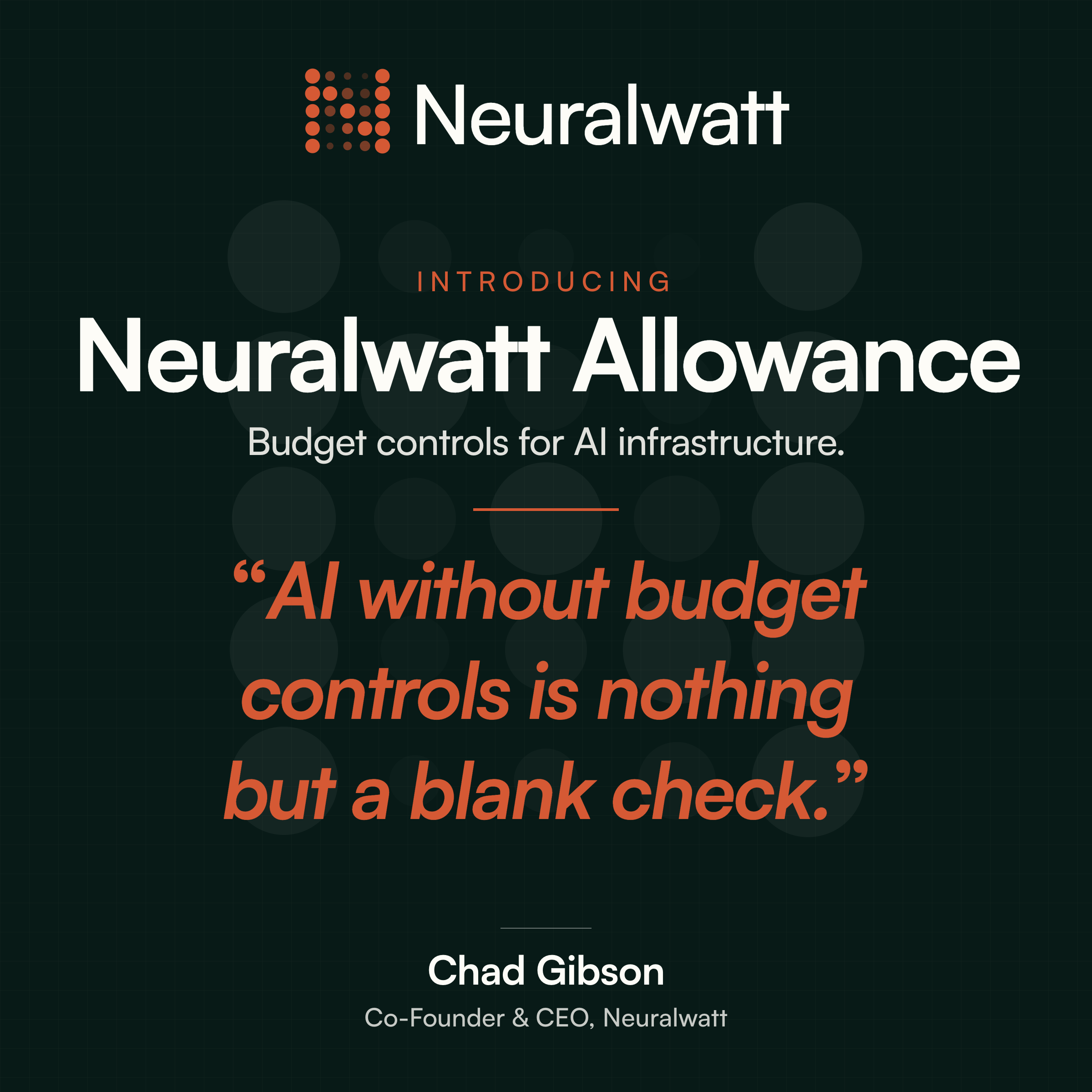
Today, Neuralwatt is introducing Allowance — budget controls built directly into the platform, that give every API key its own spending limit, so teams have visibility and control before runaway consumption becomes an interruption. Neuralwatt can already increase throughput by 33 percent; Allowance extends that progress by bringing the same transparency and control to AI budgets that Neuralwatt has always brought to energy usage.
AI Without Guardrails
AI spending is growing faster than most teams can plan for, yet while the industry has invested heavily in making AI more capable, it has invested far less in making it more manageable. Global AI spend is on track to hit $2.53 trillion in 2026 (up 44 percent year over year) with 86 percent of organizations claiming their budgets will increase even further. Yet despite steep investment, most teams still have no real-time visibility into what they are actually consuming.
But the financial impact is only part of what is at stake. When a workflow hits its limit, critical work grinds to a halt. For teams that have built AI into their core operations, that interruption is not just a minor inconvenience, it is a productivity failure. Cost overruns and productivity loss are symptoms of the same underlying problem, and teams simply do not have the visibility they need to stay ahead of either.
"Compute doesn't exist without energy, and cost shouldn't exist without visibility. So, AI without budget controls is nothing but a blank check,” said Chad Gibson, co-founder and CEO of Neuralwatt. “Transparency is foundational to everything we build at Neuralwatt, and in an industry where AI consumption has been largely opaque, we’re providing that clarity."
Smarter Inference Without Overspend
Neuralwatt Allowance was built to put control back into the hands of the teams running the workloads. Every API key gets its own spending limit — daily, weekly, or monthly — and every response includes real-time pricing headers so teams can see exactly what each request costs, as it happens. Agents become budget-aware, reporting progress and flagging when they are approaching their limit, rather than hitting a wall without warning.
For agentic workflows specifically, per-session limits give teams an additional layer of control, capping what a single agent can spend without affecting other sessions running in parallel. And because Allowance sends email notifications at 80% of a key's limit, teams receive a warning before consumption hits its limit. Allowance is native to the Neuralwatt platform, and is included in every subscription, active from day one, with no additional setup required.
Neuralwatt was founded on the conviction that AI infrastructure should be transparent by design. Allowance builds on that foundation, ensuring gains from optimization aren’t eroded by unplanned spending, and that capacity limits are never the reason great work doesn't get done.
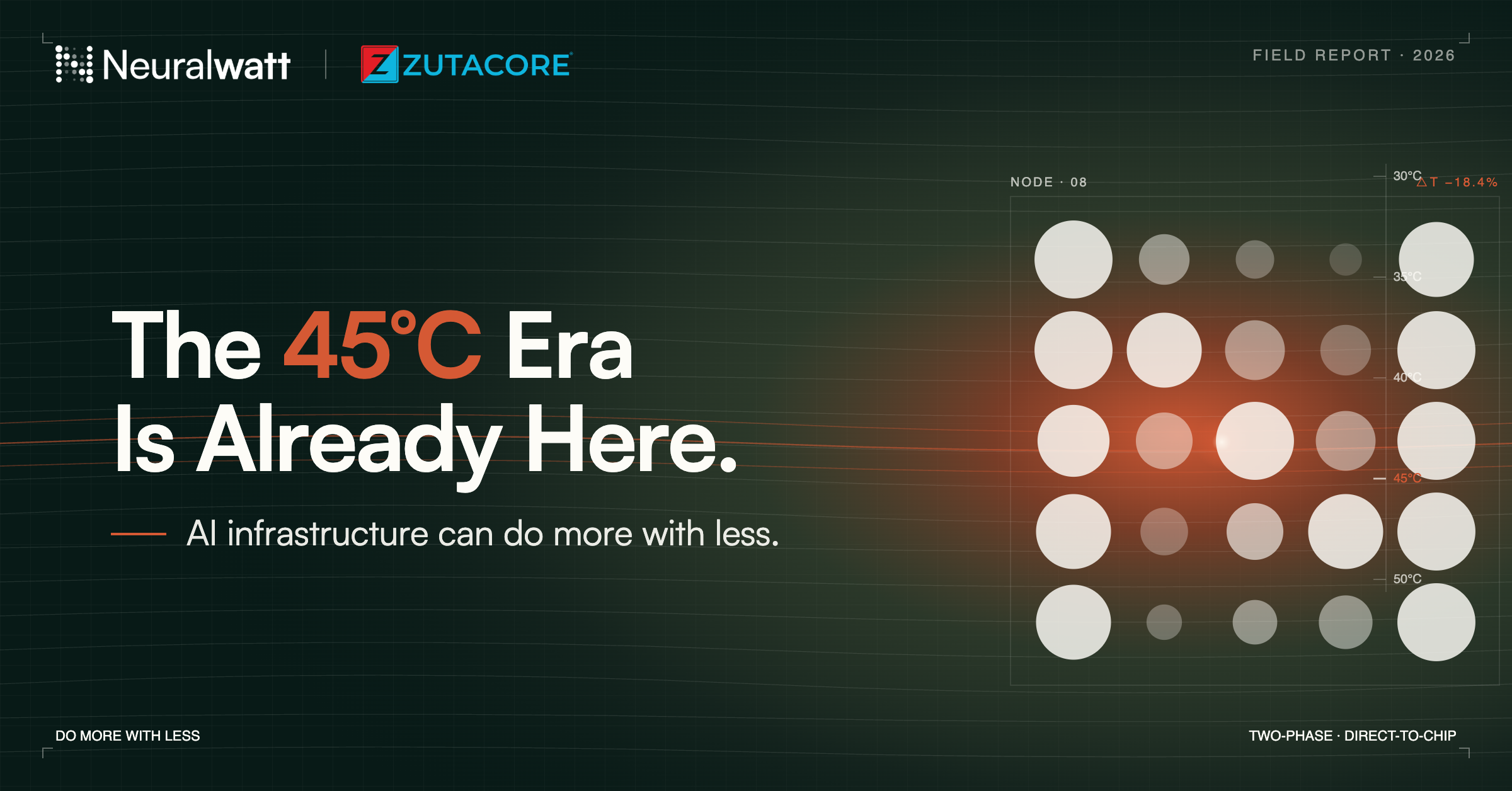
Neuralwatt, the leader in AI power optimization, today released findings from joint testing with ZutaCore, a pioneer in waterless direct-to-chip liquid cooling, showing that AI data centers can operate at 45°C warm-water temperatures on current-generation B200 hardware, effectively eliminating the need for energy-intensive mechanical cooling without sacrificing a single token of inference performance.
In what is one of the first combined compute and cooling optimization testing efforts in the industry, Neuralwatt and ZutaCore ran nearly 500 paired experiments on current-generation NVIDIA B200 hardware under real-world, high-intensity AI inference workloads. The results prove that current-generation hardware can operate at the warm-water temperatures the industry is moving toward.
The 45°C era is already here
At CES in January, Jensen Huang announced that NVIDIA's next-generation Vera Rubin platform is designed to operate with 45°C inlet water — warm enough to eliminate chillers in most climates and significantly reduce energy consumption and water use. The industry took note, but left many wondering whether the operating point is viable today, on hardware that is already running, or if it is something to prepare for in the next hardware cycle.
Results from Neuralwatt and ZutaCore testing confirm that 45°C warm-water operation is viable today, on hardware operators are already running. Across nearly 500 paired experiments at temperatures from 28°C to 46°C, the combined Neuralwatt and ZutaCore stack delivered:
- Zero thermal throttling across the entire tested range. ZutaCore's cooling keeps B200 GPUs within safe thermal limits at warm-water temperatures most operators have not attempted. The system does not throttle until 49°C, well above the 45°C industry target, giving operators meaningful room to operate.
- No performance penalty. With ZutaCore cooling and Neuralwatt's optimization agent working together, inference throughput at warm operating temperatures is statistically indistinguishable from the coolest tested point. Running hotter does not mean running slower.
With ZutaCore's cooling as the foundation, Neuralwatt's optimization agent delivered:
- Roughly triple the thermal buffer at 45°C compared to running without optimization. GPU memory temperatures stay approximately 6°C further from the throttle boundary, meaning the system is not just stable at 45°C, it has meaningful headroom to spare.
- An 18-19% reduction in server power consumption across every temperature tested, roughly 10x more impactful than any savings achievable through cooling adjustments alone. Because less server power means less heat to remove, those savings extend beyond the servers themselves. At typical operating efficiency, every 8-GPU system produces an estimated 6.3kW of total facility energy savings
- A 3x improvement in power stability, with variability dropping from 4.2% to 1.2%. AI workloads run more consistently, capacity planning becomes more reliable, and delivering on performance commitments gets meaningfully easier.
- Between 1.5°C and 7°C of effective thermal reduction depending on the workload, achieved through software optimization alone. This extends the safe operating range without any changes to physical infrastructure, giving operators more room to push hardware harder."
The path forward
AI is growing faster than the infrastructure built to support it. Global AI computing capacity has surged 3.3x per year, and power and thermal constraints are increasingly limiting how far organizations can scale. But the combined ZutaCore and Neuralwatt stack gives operators a concrete path to more compute, lower costs, and a smaller energy footprint without new hardware, new construction, or waiting on the next GPU generation.
Additional trials are underway, and the co-optimization opportunities between ZutaCore's cooling control and Neuralwatt's workload-aware agent represent a path to further gains.
The constraint on AI growth is no longer just compute, it is energy, thermal capacity, and the infrastructure built to support both. The industry has historically treated those as fixed constraints, but Neuralwatt and ZutaCore are proving that they are not.
About Neuralwatt
Neuralwatt is AI power optimization software that sits alongside existing infrastructure, measuring and optimizing energy at the workload level. By making every watt visible, measurable, and actionable, Neuralwatt helps organizations increase capacity, reduce costs, and lower carbon emissions — without new hardware or infrastructure changes. In production environments, customers have achieved 33 percent more compute from their existing power envelopes.
About ZutaCore
ZutaCore is a leader in waterless, direct-to-chip liquid cooling for AI and high-performance computing. Powered by its patented two-phase HyperCool technology, ZutaCore removes heat directly at the processor through a sealed, closed-loop system — eliminating water use, reducing cooling energy by up to 82%, and enabling significantly higher compute density.
For more information on the testing methodology and full results, contact meaghan@neuralwatt.com

Yesterday, we joined the OpenClaw community for ClawShop, the largest virtual OpenClaw event to date, hosted by our friends at Kilo. Events like ClawShop put us in front of the builders who are pushing AI agent workflows forward, and we left feeling energized about the future and who we're building for.
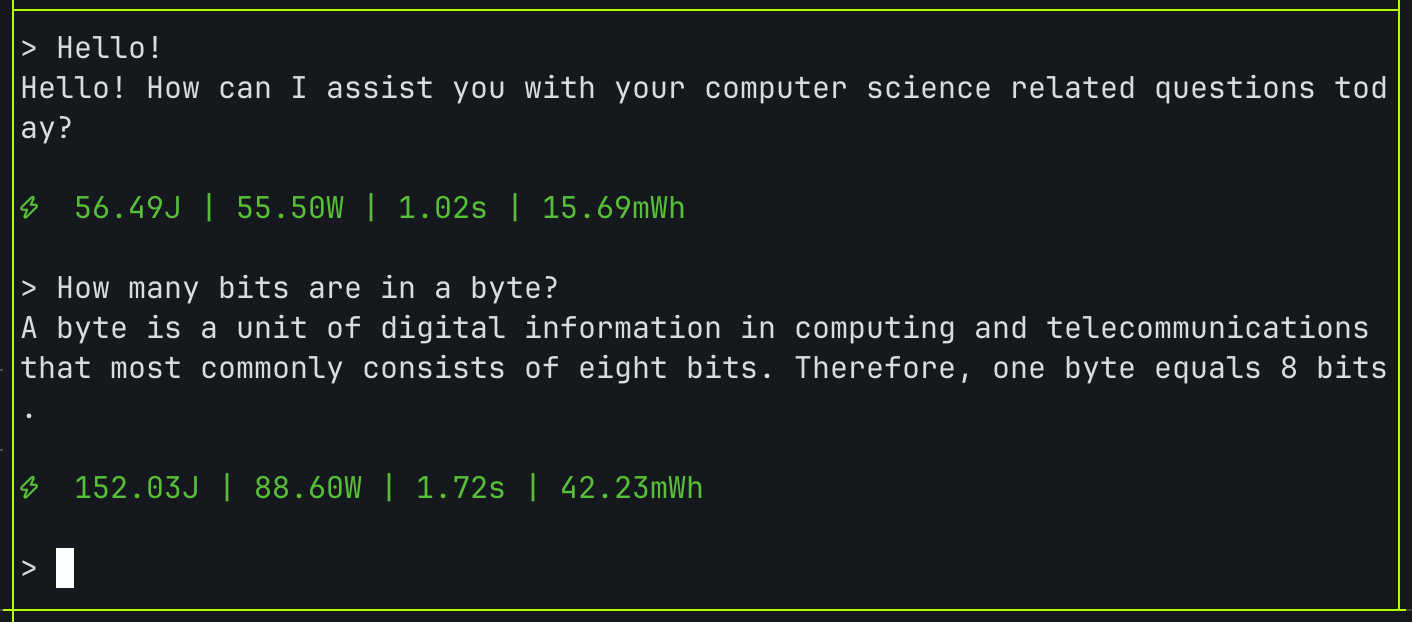
How to integrate Neuralwatt with your existing tools
Neuralwatt and GreenPT today announced a strategic partnership to set a new global standard for sustainable AI inference. The collaboration is designed as a direct response to this gap; introducing infrastructure where energy usage is measurable, transparent, and tied to how AI is actually consumed.

Neuralwatt launched Neuralwatt Cloud, a hosted inference platform with the industry’s first energy-based pricing model, designed to boost compute capacity and reduce energy costs without new infrastructure.
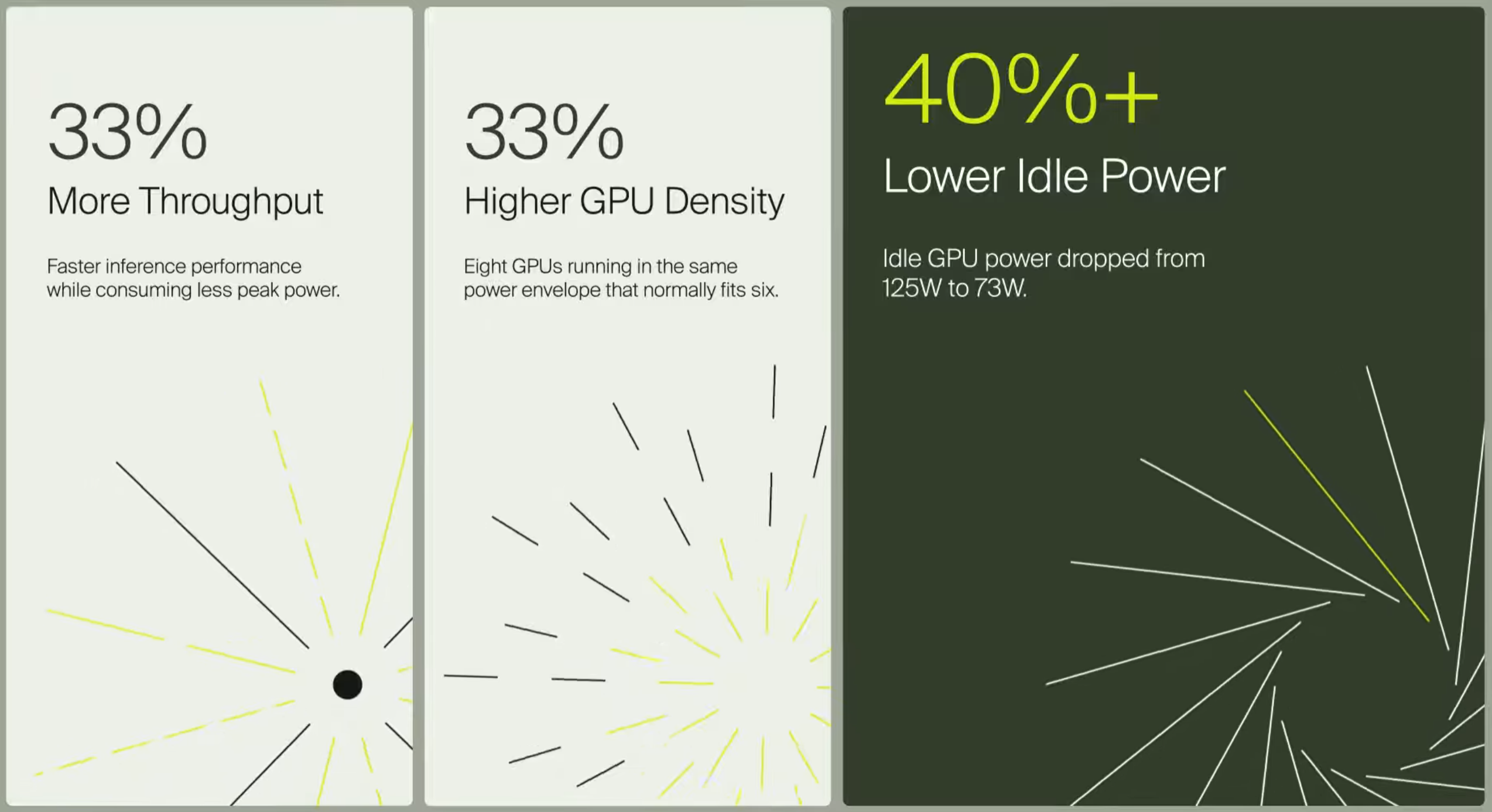
Want to increase your AI server density without sacrificing performance? Discover how Neuralwatt used Crusoe Cloud to solve the "AI energy paradox" and prove their innovative power management software. By leveraging our NVIDIA HGX H100 GPU clusters in Iceland — powered by 100% clean geothermal and hydro energy — Neuralwatt gained the unrestricted NVIDIA SMI access they needed to drive deep hardware-level telemetry. The results of this breakthrough:33% increase in AI inference throughput33% better server density (8 GPUs in a 6-GPU power envelope)40%+ reduction in idle GPU power draw (from 125W to 73W)"On Crusoe, we’ve had everything we needed… The ease of access to the NVIDIA hardware has been instrumental," says Chad Gibson, Co-founder and CEO of Neuralwatt.
Neuralwatt helped power the AI Energy Score v2 refresh. In partnership with Hugging Face’s AI Energy Score team, Neuralwatt (via Scott Chamberlin) contributed to streamlining the benchmarking workflow and expanding the evaluation suite to support reasoning-model energy testing. This work also supported the creation of AI Energy Benchmarks, a new open-source package designed to make energy benchmarking more scalable and portable across different hardware/software configurations—helping the community better measure and compare the real-world energy cost of modern LLM inference, especially as reasoning modes become more common.
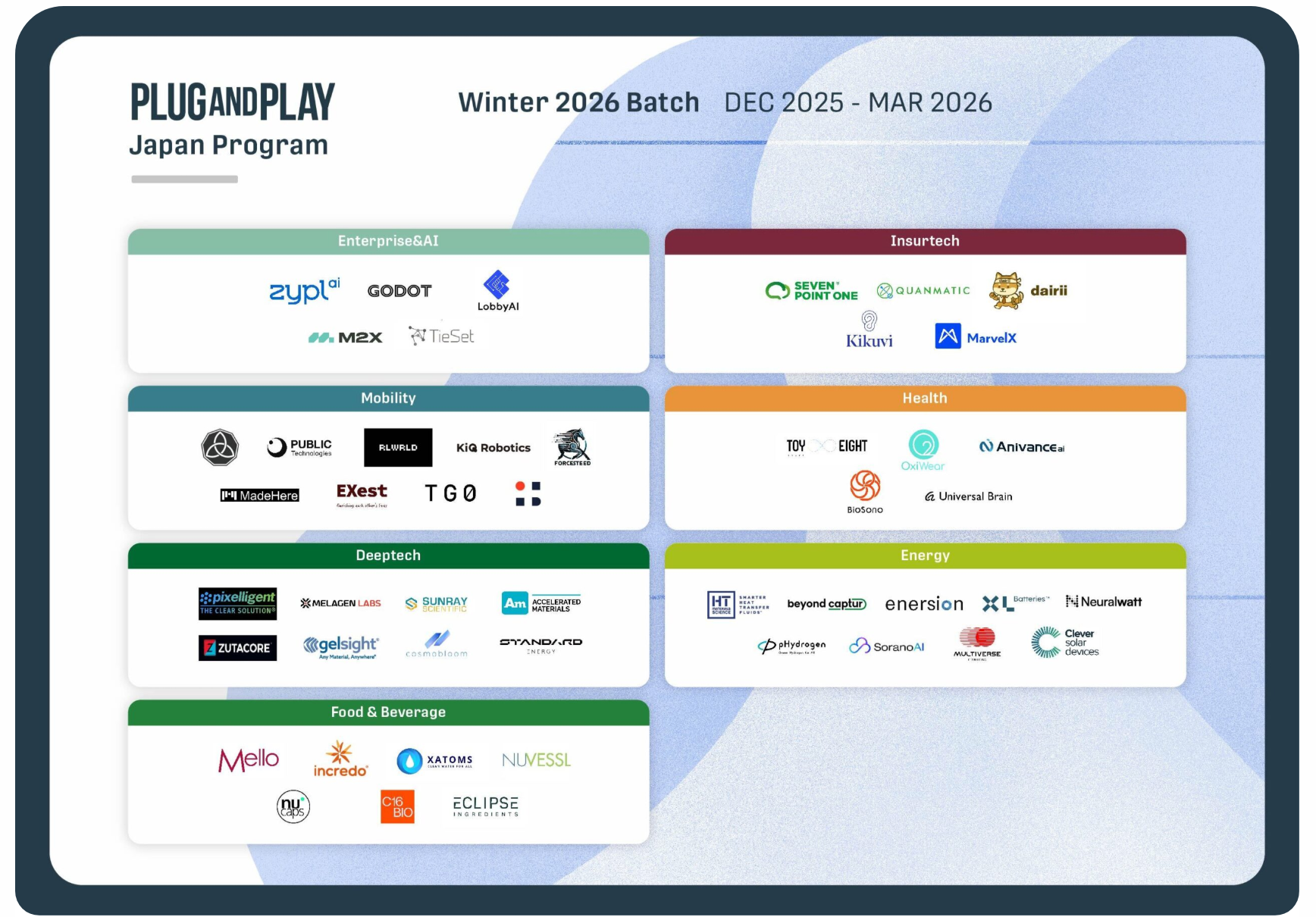
Neurwatt was selected to the Winter 2026 Plug and Play Accelerator program.
.png)
Neuralwatt, a pioneer in AI power management, boosted AI inference throughput by 33% and reduced GPU idle power by over 40% on Crusoe Cloud. Discover how Crusoe's cost-effective, climate-aligned, and technically open platform empowered their breakthrough in sustainable AI.
.png)
Last year, as we published the Cleantech 50 to Watch, the world stood on the edge of a U.S. presidential election, and with it, a great deal of uncertainty about the direction of policy and investment.
.png)
How software tools are improving data center speed-to-power while easing grid strain
.png)
In this episode of Environment Variables, host Chris Adams welcomes Scott Chamberlin, co-founder of Neuralwatt and ex-Microsoft Software Engineer, to discuss energy transparency in large language models (LLMs).
.png)
Hear from Lowercarbon Capital, Collaborative Fund, Alumni Ventures, New System Ventures, SOSV, Streetlife Ventures, DCVC, Pangaea Ventures, F(v) and more
Blog Posts
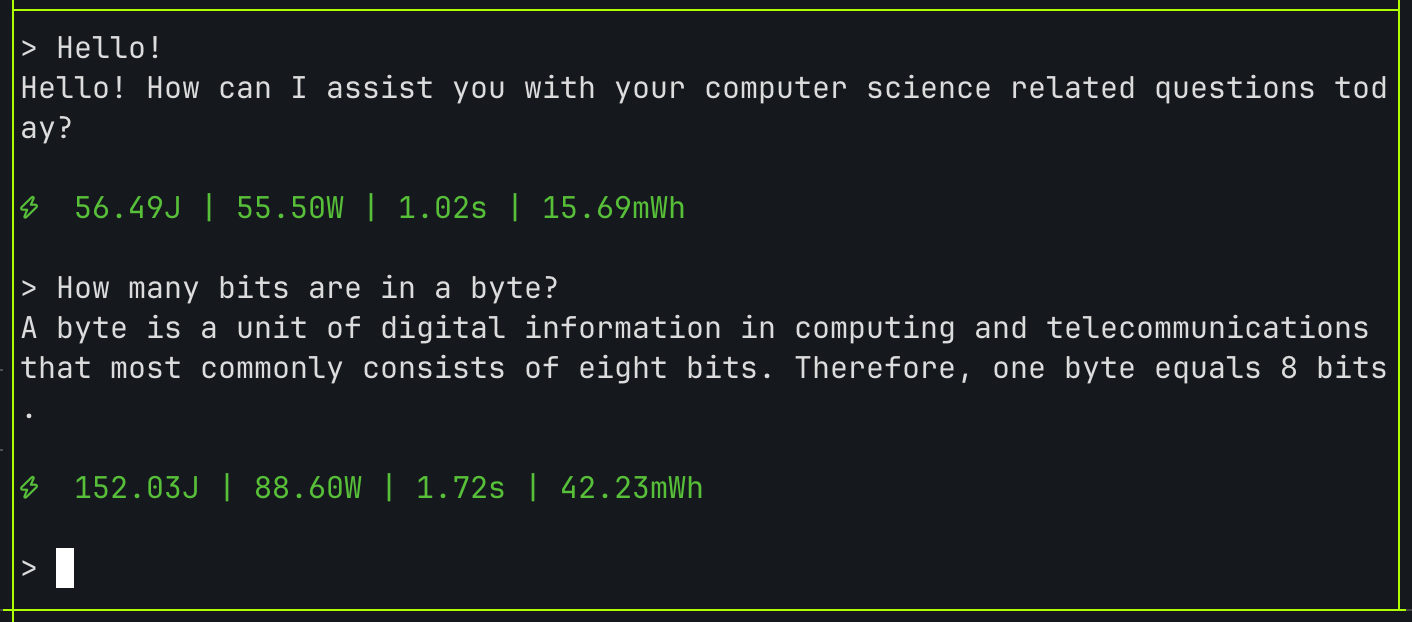
How to integrate Neuralwatt with your existing tools
Read MoreWhat We Shared at ClawShop, and why AI's Hidden Costs are Finally Getting a Fix
Read MoreIn production environments, customers are already getting 33 percent more compute from the same power envelope. Now they can see the carbon behind every watt.
Read MoreAn analysis of the energy performance between Kimi-K3, GLM 5.2 and DSv4F on Neurawatt Cloud.
Read MoreNeuralwatt and GreenPT today announced a strategic partnership to set a new global standard for sustainable AI inference. The collaboration is designed as a direct response to this gap; introducing infrastructure where energy usage is measurable, transparent, and tied to how AI is actually consumed.
Read MoreIf you believe AI should be built responsibly, share this. The decisions being made in the next eighteen months will outlive every model we’re excited about today, and the communities carrying their cost deserve proof that the capacity was necessary.
Read MoreWhat’s driving AI energy demand, what’s actually at stake, and how better power literacy can keep growth aligned with the grid. AI is changing the energy profile of data centers, but the central story does not have to be one of inevitability. Data centers accounted for about 1.5% of global electricity use in 2024, and the IEA expects demand to rise meaningfully by 2030 as AI scales. That is enough to matter for grids, communities, and operators, but it is also a scale where measurement, efficiency, and better software can make a real and meaningful difference. But exactly how big is the AI and energy challenge we’re facing, and what would it take to grow AI in a way that is measurably more efficient and responsible? We dive into some of the most pressing questions being asked about AI today.
Read More